A swamp cooler, also called an evaporative cooler, cools a home with water and moving air. A pump lifts water to pads inside the unit, a fan pulls warm outside air through the wet pads, and the air comes out cooler as the water evaporates. It is a simple idea, and in dry country it has kept homes comfortable for decades. This site connects homeowners with local providers who repair, maintain, and install these coolers in fifty cities across the country.
If your cooler runs but the air feels warm, or it leaks, rattles, or smells musty when it starts up, you are in the right place. The pages here explain how these coolers work, what usually goes wrong, and what a repair visit covers, so you can talk with a provider knowing what to expect. You can browse the eight services we list, read the answers to common questions, and find the city page for your area.
Swamp Cooler Repair USA is a referral service, which means the local providers do the work and we connect you with them. We do not send our own crews, and we do not pretend otherwise. A provider in your area handles the visit, looks at the cooler, and carries out the repair or maintenance you agree to. That keeps the work in the hands of people who know the local climate, the local water, and the cooler models common in local homes.
When you are ready, call (877) 796-0425 and describe what your cooler is doing, or not doing. A short description helps the provider come prepared: whether the air is warm, water is pooling, the pump is silent, or the motor hums without turning. From there, the provider sets up the visit and takes it from there.
How a Swamp Cooler Cools Your Home
Cooling starts with evaporation. When water turns to vapor it draws heat from the air around it, and a swamp cooler puts that simple fact to work. A pump moves water from the reservoir at the bottom of the unit up to the top of the pads, and the water trickles down through them, keeping them wet. A blower then pulls warm air from outside through the soaked pads. As air passes through, some water evaporates, the air loses heat, and cooler, slightly moist air flows into the home.
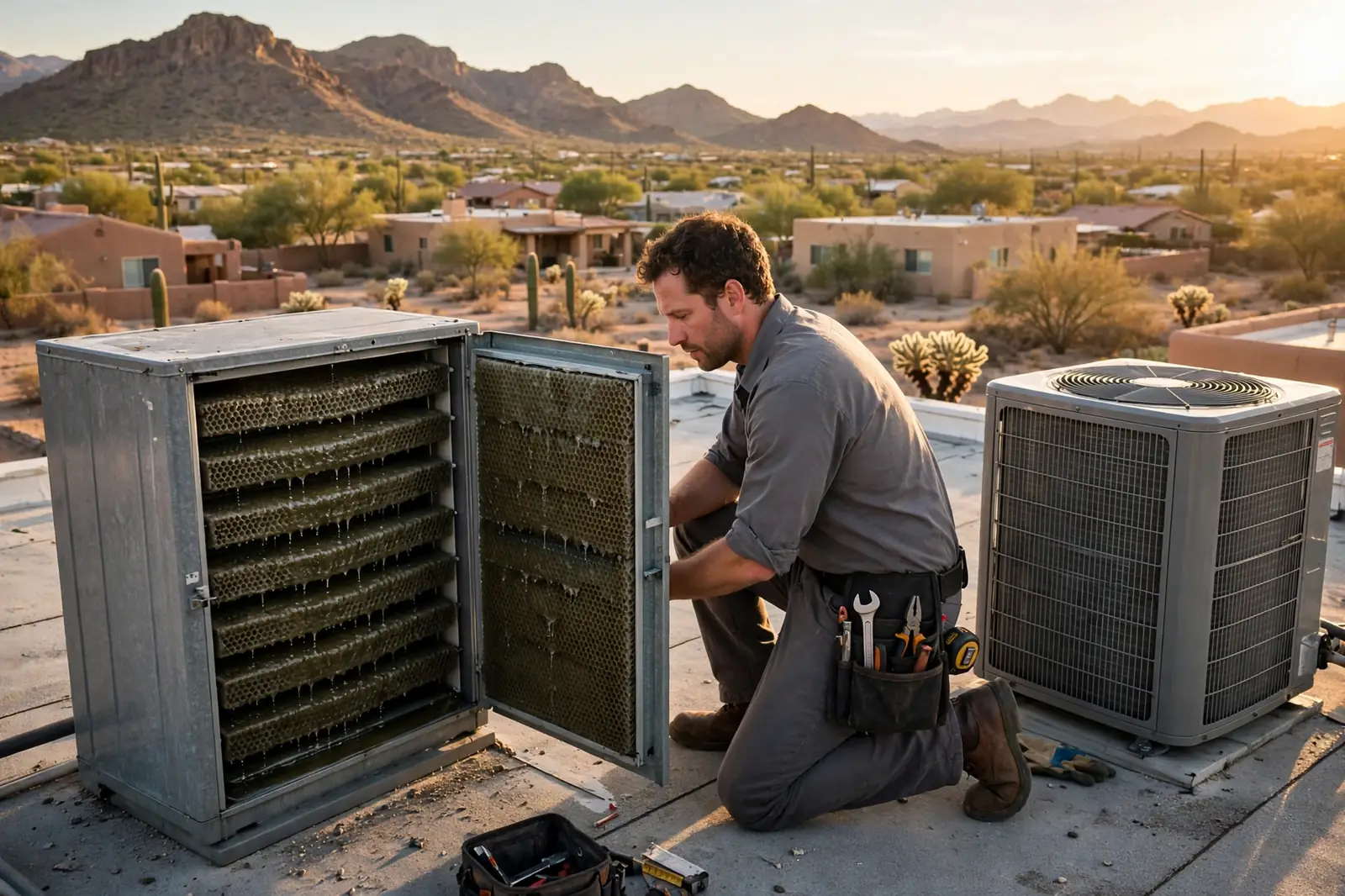
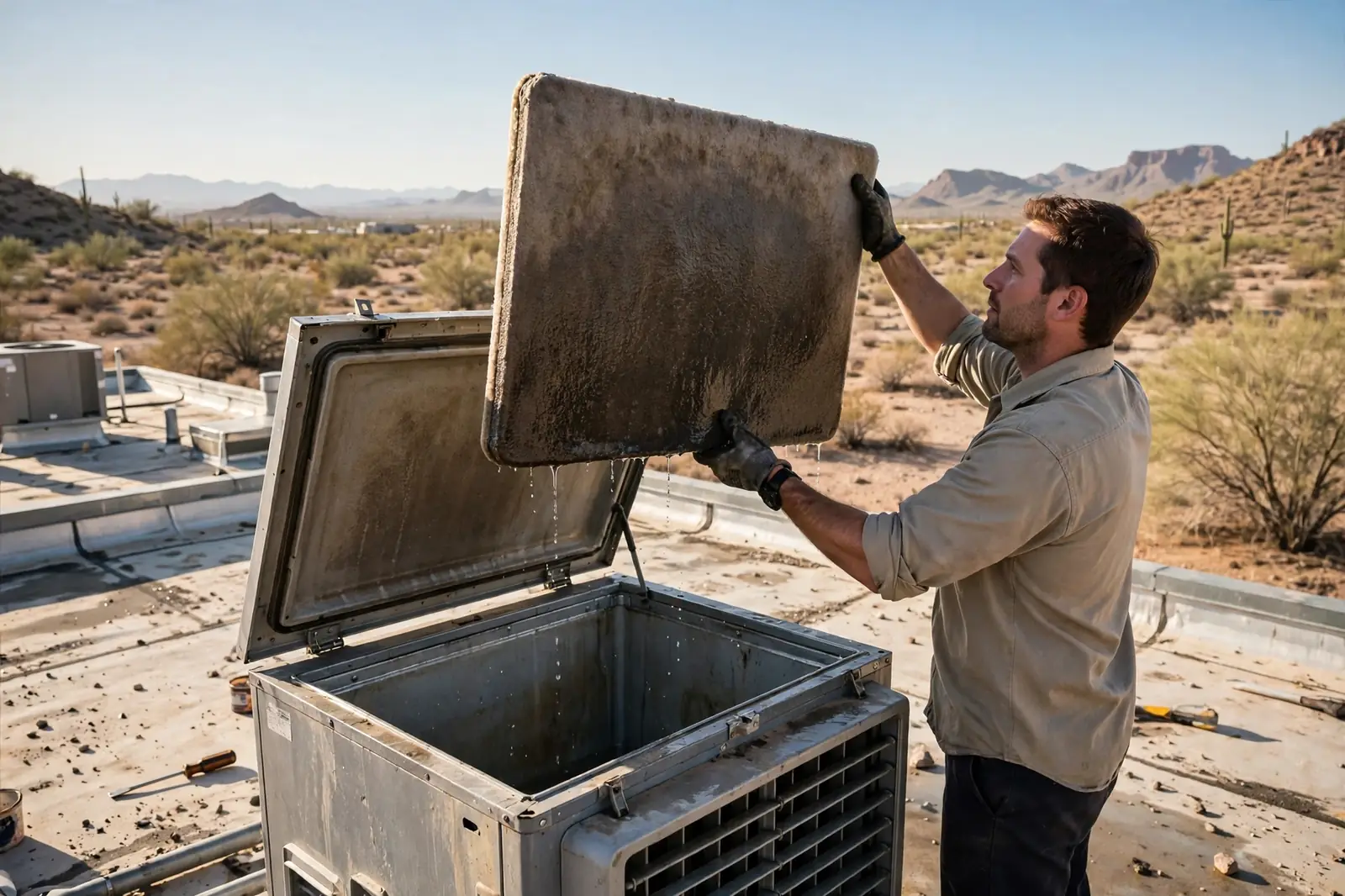
The pads are the heart of the process. They give the water a large surface to spread across so the passing air meets as much wet material as possible. Older coolers use aspen wood fiber pads, while many newer units use rigid cellulose pads that hold water well and last longer between changes. Either way, a pad that is dry in patches, clogged with mineral scale, or sagging away from its frame cannot cool the air passing through it. That is why pad condition shows up in so many repair calls.
Airflow matters as much as water. A swamp cooler pushes a steady stream of cooled air into the house, and that air needs somewhere to go, so a window or door is usually left open a crack to let warm air escape. If the house is sealed tight, pressure builds and the cooler cannot move air through the pads properly. The system works well when the outside air is dry, because dry air can take on plenty of moisture. When the air is already humid, evaporation slows and the cooling effect drops away.
Common Swamp Cooler Problems Homeowners Call About
The call we hear most often is simple: the cooler runs, but the house stays warm. Sometimes the pads have dried out because the pump has stopped moving water, and sometimes the pads are so clogged with scale that air barely passes through them. A worn blower belt can slip, a motor can run slowly, or the water level can sit too low for the pump to pick up. Each cause feels the same from inside the house, which is why a look inside the unit matters before any part is changed.
Water where it should not be is the next common complaint. A cooler can leak from a cracked reservoir, a loose water line connection, a float valve that no longer shuts off, or a drain that has worked its way open. Small leaks often show up as damp spots on the roof or a water stain on a ceiling below a rooftop unit. Left alone, a steady leak wastes water, soaks pads unevenly, and can damage the roof or the framing around the cooler. A provider traces the water back to its source rather than guessing at it.
Smells and noise round out the usual list. A musty smell at startup often points to pads that sat damp and dirty between seasons, or to standing water in the reservoir that needs draining and cleaning. A grinding or rattling sound can mean a worn motor bearing, a loose blower wheel, or a belt that has cracked with age. A pump that hums without moving water may be jammed with scale or may have burned out. These faults are common, they are familiar to the providers we connect you with, and most are found quickly once the panels come off.
What a Repair Visit Usually Covers
A repair visit usually starts with a look, not a part. The provider opens the unit, checks the pads, the water level, the pump, the motor, and the blower, and listens to the cooler run. That inspection shows whether the trouble is a single worn part, a buildup of scale, or a combination of small problems that have added up over a season or two. You can expect plain talk about what was found before any work begins, and the chance to ask questions about what the fix involves.
Once the cause is clear, the work follows it. Pads that are clogged or falling apart are swapped for fresh ones, and the water distribution tubes are cleared so every pad gets wet evenly. A pump that no longer moves water is repaired or replaced, and a motor that runs hot, hums, or fails to start gets the same attention. Water lines are checked for cracks and tightened or replaced, and the float valve is adjusted or swapped so the reservoir fills to the right level and shuts off cleanly.
The provider also checks the parts that fail quietly. Belts are checked for cracks and tension, bearings are listened to while the blower turns, and the reservoir is cleaned of scale and sediment that can jam a pump. Vents and ducts are checked for blockages that starve rooms of air, and the drain is checked so the unit can be emptied at the end of the season. When the work is done, the cooler is run through its paces so you can feel the air yourself and see the water moving the way it should.
Swamp Coolers and Dry Heat: Where They Work
Swamp coolers earn their keep in the desert Southwest, where summer air is hot and dry. Dry air can take on a great deal of moisture, so evaporation works hard and the temperature drop is easy to feel. Homes there often use a cooler as the main way to stay comfortable through the long hot season, with a refrigerated system only as backup or for the most humid days. The cooler uses water and a fan rather than a compressor, so it fits a climate where the air itself is ready to be cooled this way.
The picture changes in humid metros. Houston, Dallas, and San Antonio sit in country where summer air already carries plenty of moisture, and a swamp cooler can only add so much more before evaporation slows to a crawl. On a muggy afternoon the air coming out may feel damp without feeling much cooler, and opening windows for airflow can let in more humidity than it lets out. That does not make the cooler useless, but expectations should be honest: it cools less strongly than in dry country, and some homeowners pair it with a refrigerated system for the stickiest weeks.
Two local conditions deserve attention wherever a cooler runs. Monsoon season in the Southwest brings dust storms that can clog pads and coat the inside of a unit with fine grit, so pads may need checking more often after a dusty stretch. Hard water is the other slow problem: minerals left behind as water evaporates build up as scale on pads, in the reservoir, and inside the pump. Scale narrows water passages, dries pads in patches, and shortens the life of parts. Regular cleaning and fresh pads keep both problems from turning into a repair call.
Keeping Your Cooler Running Through the Season
Pads do most of the work, so they deserve most of the attention. Check them at the start of the season and again partway through, and change them when they are clogged, torn, or sagging. A fresh pad wets evenly and lets air pass freely, which is the whole job. While the panels are off, look at the water distribution tubes as well: a blocked tube leaves a dry stripe down a pad, and a dry stripe is a patch of warm air coming straight into the house.
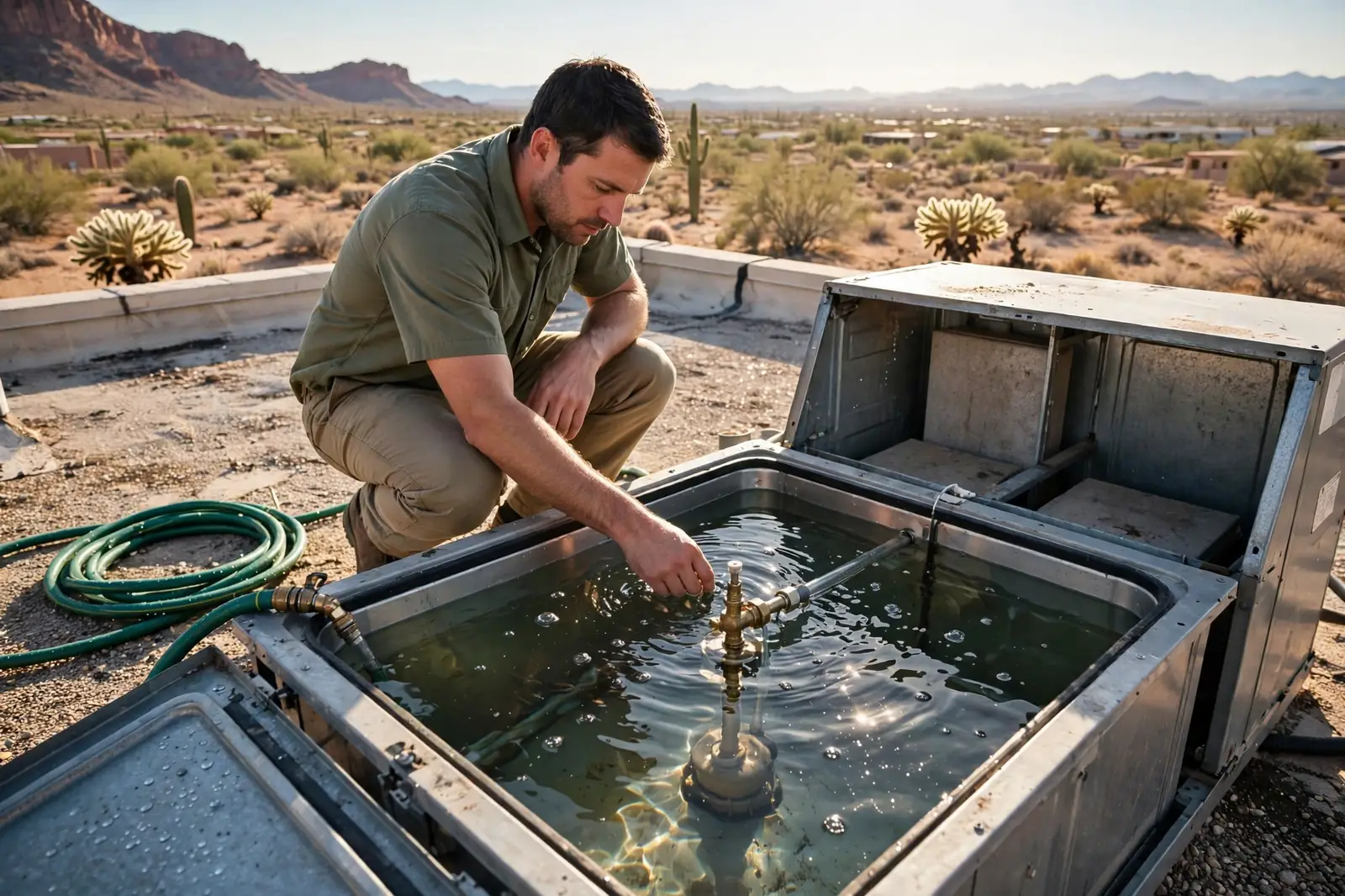
Water quality and cleanliness shape how long parts last. Drain and clean the reservoir when the water looks cloudy or smells stale, and clear out the sediment that settles at the bottom. A float valve that sticks open wastes water, while one that sticks shut starves the pump, so watch the water level for a few minutes after a fill to see that it settles where it should. In areas with hard water, scale builds faster, and a mid-season cleaning can be the difference between a cooler that hums along and one that struggles.
When the season ends, put the cooler to bed properly. Drain the reservoir, disconnect the water line, and let the pads dry out before the unit is covered, so damp pads do not sit and grow musty over the winter. A cover keeps out rain, leaves, and nesting pests, and it keeps the inside of the unit dry until spring. In spring, the routine runs in reverse: remove the cover, inspect the pads and belts, flush the reservoir, and run the cooler for a while before the first hot day arrives.